- CEIS | POWER
- CEIS | GOVERNMENT
- EXPERTISE
- ABOUT
- CAREERS
- Contact
Power Delivery Consulting
Specialized execution support for utilities navigating transmission upgrades, grid modernization, data center interconnections, and accelerating capital programs — embedded on the owner's side, from first project meeting through energization day.
Industry Context
Utilities face a convergence of operational pressures unlike anything seen in previous decades — managing more demands simultaneously with fewer experienced people and tighter execution timelines.
More than 10,300 projects representing ~1,400 GW of generation capacity wait in U.S. queues. When one stalls, dozens behind it stall too — a cascade that blocks sustainability, reliability, and load-growth initiatives across the board.
Utilities face one of the largest workforce transitions in industry history. The people who built institutional knowledge over decades are leaving — and the industry isn't backfilling fast enough. Engineering is the most critical gap.
U.S. data center power demand is projected to more than double by 2027. Utilities are being asked to power facilities the size of small cities — and most have never dealt with this scale or speed of large-load integration before.
U.S. utility capex is projected to approach $1.3 trillion between 2026 and 2030 across transmission expansion, grid modernization, resiliency, and large-load infrastructure. The constraint isn't funding — it's execution capacity.
What Is Power Delivery?
Power delivery refers to the infrastructure, systems, engineering, and operational processes required to move electricity from generation sources to homes, businesses, industrial facilities, substations, and large-load customers.
As CEIS's power delivery practice leader puts it: "Power delivery keeps the lights on — literally for residents and their IOU, and for everything else that powers modern life." Every data center, AI workload, manufacturing plant, and home depends on these systems functioning reliably.
Our Position in the Market
CEIS is a utility-focused project solutions firm — a true owner-side execution partner that integrates directly into your programs. We deploy experienced professionals who've done this work before, in environments like yours, who can look your team in the eye and tell you what's right and what needs to change.
We embed across engineering, project management, construction management, procurement coordination, and infrastructure delivery. When our bench is deployed with you, that's someone accountable and on-site — competing against the industry juggernauts week in and week out.
"We are on the owner's side, and we do not subcontract." That distinction matters in an industry where accountability often diffuses across multiple contractor layers.
Power Delivery Services
Our services span the full infrastructure program lifecycle — from engineering coordination to final energization — with experienced professionals embedded directly in your operations.
Owner-side technical oversight that gives utilities visibility, control, and accountability throughout infrastructure programs. Our teams handle engineering coordination, design review, redline markup, EPC oversight, and energization readiness — ensuring your interests are represented at every project stage.
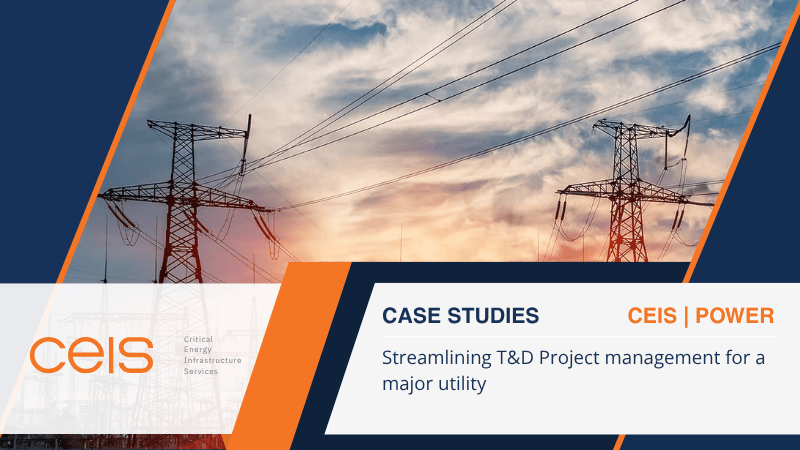
Experienced project managers and PMO specialists embedded directly into your utility programs to improve delivery performance across transmission, distribution, substation, and grid modernization projects. We've stepped into programs mid-stream, inherited failing initiatives, and turned execution gaps into delivery momentum.
Full-range T&D infrastructure support across transmission line upgrades, substation expansions, wildfire mitigation, storm hardening, composite pole programs, relay upgrades, protection and controls coordination, distribution automation, and SCADA modernization.
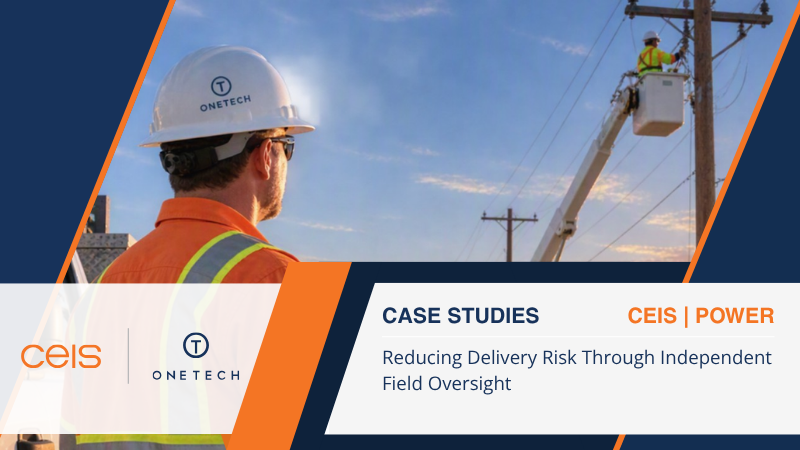
Field-experienced professionals overseeing complex infrastructure programs directly on-site. We manage contractors, coordinate schedules, ensure quality standards are met, and support final inspection and energization. Our supervisors carry both the on-the-ground field experience and the organizational management capability to be a single point of accountability.
After Hurricane Helene, Winter Storm Uri, and others, grid hardening is a capital priority — not a future plan. When power goes out, IOUs aren't making money and communities face real safety risks. CEIS supports hardening, reliability improvements, and asset replacement programs across T&D systems to keep the lights on and keep utilities operating.
AI infrastructure and hyperscale data centers are fundamentally changing utility planning and execution requirements. Utilities are being asked to support demands comparable to small cities — at unprecedented speed. CEIS bridges the gap, supporting interconnections, substation development, transmission coordination, and capacity expansion with professionals who understand both the delivery and large-load sides.
When to Engage CEIS
"Successful utility programs demand disciplined execution — engineering, construction, PM, and field leadership operating as one team from planning through energization."— Braden Wright, CEIS Power Delivery Practice
Whether you need embedded specialists, owner's engineering, PMO leadership, or full program execution, CEIS integrates into your utility to deliver infrastructure projects confidently.
Request a Capability DiscussionCommon Execution Bottlenecks
They're caused by execution bottlenecks. CEIS helps utilities identify and reduce these through experienced project execution support and operational coordination.
Engineering is the single biggest need in utilities right now due to the aging workforce. Experienced engineers aren't being replaced at the rate they retire — and the knowledge gap is widening with every retirement.
CEIS provides specialized utility engineers, embedded and accountableProgram management offices are stretched across more simultaneous infrastructure initiatives than internal teams can effectively manage — creating scheduling conflicts, reporting gaps, and delivery delays.
CEIS steps in as embedded PMO support from day oneOne stalled interconnection can block dozens of downstream projects. The cascade effect creates bottlenecks from billing all the way through to final delivery — stalling sustainability, reliability, and load-growth initiatives.
CEIS supports interconnection coordination and queue managementManaging multiple GCs across complex T&D programs requires embedded field oversight that many utilities lack the internal bandwidth to sustain across their full program portfolio.
CEIS provides on-site construction management and GC oversightLead times on critical materials — including composite poles — can run three or more years. Owner-rep procurement support can open alternate sourcing paths, flag warranty opportunities, and protect schedule.
CEIS acts as owner's representative in procurement coordinationInstitutional knowledge walks out with every retirement. CEIS brings utility-experienced specialists who contribute immediately — not professionals learning on your program's dime.
CEIS bridges the knowledge gap with experienced utility specialistsPost-storm resiliency initiatives require rapid mobilization of experienced professionals. Grid hardening can't wait — and neither can IOUs who aren't making money while infrastructure is down.
CEIS mobilizes experienced field professionals quicklyUtilities are being asked to power facilities the size of small cities. Most have never navigated this at scale — and need partners who understand both the delivery and the large-load side simultaneously.
CEIS bridges delivery expertise with large-load integration supportEnergization bottlenecks delay project close-out and revenue recognition. CEIS supports sequencing coordination to move programs across the finish line without last-minute scheduling failures.
CEIS manages energization sequencing through to project close-outWhy Utilities Choose CEIS
Utilities rely on CEIS not just because we show up — but because we show up with the right people, in the right environment, focused on the right outcomes.
Real-world T&D experience — not broad construction backgrounds. Our professionals understand the operational, regulatory, and execution challenges utilities face in real infrastructure environments.
We operate with utility priorities in mind. When we deploy a professional to your program, they're someone you can look in the eye and hold accountable for outcomes — not a resource at arm's length.
We support utilities from project initiation through final energization — providing continuity of execution expertise across the full infrastructure program lifecycle.
Embedded teams, targeted scopes, or full program execution — we flex around what your utility needs. No forcing a large contract structure onto a targeted execution problem.
Supporting utility infrastructure programs across the United States and Canada — from IOUs and public utilities to transmission operators, municipal utilities, and renewable energy programs.
We tell you what we're good at — and what we're not. Utilities trust CEIS because we're honest about fit, focused on execution, and present through both challenges and successes.
Frequently Asked Questions
Ready to Move Forward?
Whether your organization is managing aging infrastructure, accelerating grid modernization, supporting data center growth, or addressing workforce shortages — CEIS can strengthen execution capacity across your utility programs.
CEIS Power specializes in project services and support, providing experienced project teams and hard-to-source professionals for the energy and industrial sectors. Clients benefit from a unique combination of utility and OEM-trained expertise that helps exceed operating and asset management goals while navigating change. Backed by deep experience with one of the largest technical staffing companies in the U.S., CEIS Power is focused on delivering reliable energy and infrastructure solutions.