- CEIS | POWER
- CEIS | GOVERNMENT
- EXPERTISE
- ABOUT
- CAREERS
- Contact
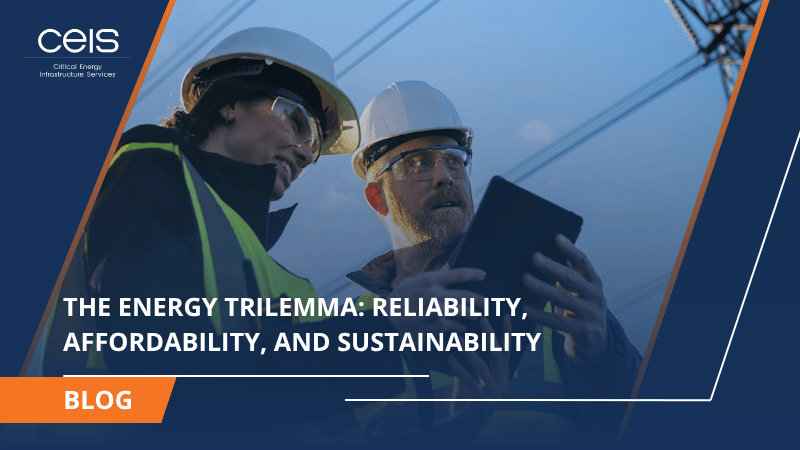
Phillip Henry coined the term “trilemma” in 1672 to distinguish it from the much older word “dilemma.” The difference is simple but significant: a trilemma involves three competing options, where advancing one inevitably affects the others.
More than three centuries later, the concept aptly describes one of the defining challenges of modern energy systems. In the 21st century, energy distribution is governed by a trilemma of reliability, affordability, and sustainability—three goals that are deeply interconnected and difficult to achieve simultaneously.
Reliability refers to the ability of the energy system to consistently deliver power when and where it is needed. Preventing blackouts and brownouts is critical not only for public safety, but also for economic stability and growth.
Affordability ensures that energy costs remain manageable for households and businesses, helping to prevent energy poverty while supporting industrial competitiveness and economic development.
Sustainability focuses on minimizing environmental impact—particularly greenhouse gas emissions—by transitioning to cleaner energy sources such as wind, solar, hydro, and other low-carbon technologies in alignment with long-term climate goals.
The challenge of the Energy Trilemma lies in the tradeoffs. Emphasizing any two objectives often places strain on the third. For example, accelerating renewable deployment can advance sustainability but may introduce cost pressures or reliability concerns without adequate storage, backup generation, or grid flexibility. Like all trilemmas, achieving balance across all three dimensions is exceptionally difficult.
Experts remain divided on whether it is truly possible to fully resolve the Energy Trilemma. Optimists argue that success requires a deliberate balancing act—one that recognizes interdependence, addresses systemic challenges, and deploys integrated solutions across generation, transmission, and distribution.
The three goals are closely linked. Extreme weather events, for instance, threaten system reliability while driving up costs. Likewise, reducing reliance on fossil fuels without adequate, sustainable alternatives can undermine both affordability and reliability. At the same time, the continued shift toward renewable energy necessitates substantial investments in new infrastructure, energy storage, and grid modernization—efforts that are complex and capital-intensive.
Several strategies are emerging to help manage this balancing act:
While some argue that sustainability should not factor into energy production and distribution decisions, consumer expectations and state-level policy priorities tell a different story. Sustainability remains a key concern for the public and regulators alike, prompting many energy producers to set and pursue renewable energy goals.
In the United States, Texas leads the nation in total renewable energy generation, while South Dakota ranks first in the percentage of electricity supplied to consumers from renewable sources. These examples underscore that, regardless of political dynamics, state regulators and electricity producers continue to work toward addressing the Energy Trilemma.
CEIS brings deep expertise to this challenge. Our team understands the complexities of electrical transmission and distribution—from system maintenance to new infrastructure development. As leaders in energy and infrastructure services, CEIS delivers integrated engineering, consulting, and field solutions that strengthen the electrical grid and support the evolving demands of reliability, affordability, and sustainability.
CEIS Power specializes in project services and support, providing experienced project teams and hard-to-source professionals for the energy and industrial sectors. Clients benefit from a unique combination of utility and OEM-trained expertise that helps exceed operating and asset management goals while navigating change. Backed by deep experience with one of the largest technical staffing companies in the U.S., CEIS Power is focused on delivering reliable energy and infrastructure solutions.
THE ENERGY TRILEMMA | RELIABILITY, AFFORDABILITY & SUSTAINABILITY | CEIS