- CEIS | POWER
- CEIS | GOVERNMENT
- EXPERTISE
- ABOUT
- CAREERS
- Contact
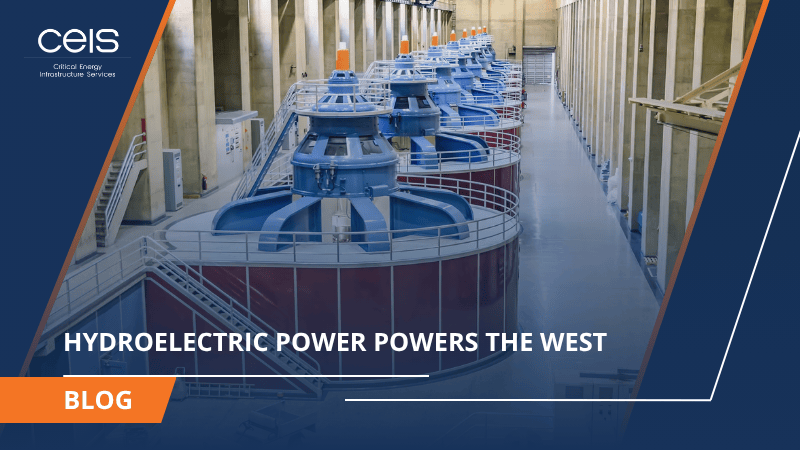
The second wave of the Industrial Revolution in the late 1800s and early 1900s was driven by major improvements in turbine design. Among the most influential innovations were those developed by Lester Pelton, whose high-efficiency turbine designs, combined with electric generators, made large-scale hydroelectric production possible.
These advancements built on centuries of engineering efforts to harness the energy of flowing water. That work reached a turning point in 1896 when Westinghouse Electric completed the Niagara Falls hydroelectric plant to deliver electricity to Buffalo, New York. While smaller powerhouses had previously generated electricity for lighting at the Falls, this was the first time hydroelectric power was produced and transmitted for large-scale commercial use.
From there, hydroelectric construction expanded rapidly across the United States and around the world. While the Tennessee Valley Authority would later lead large-scale hydropower development in the Southeast, it was the demand for electricity and irrigation in the American West that drove two of the largest hydroelectric projects ever built — Hoover Dam and Grand Coulee Dam.
When it was completed in 1936, Hoover Dam was not only the world’s largest concrete structure but also the largest electric power-generating station in the world.
Construction began in 1931 on the Colorado River in Black Canyon along the Arizona–Nevada border, although interest in building a dam in the area dated back to the early 1900s.
While the dam structure itself was substantially completed by early 1935, the Allis-Chalmers built Francis turbine-generators were not placed into service until late 1936, once Lake Mead had filled to levels sufficient to drive the turbines. By 1939, three additional turbine generators were installed, making Hoover Dam the largest power plant in the world.
By 1961, the facility operated 17 generators producing as much as 10 TWh of electricity annually.
Between 1986 and 1993, the generators were uprated, increasing the plant’s capacity to approximately 2,080 megawatts, up from 1,345 megawatts in 1961.
Although Hoover Dam’s primary mission was to control the Colorado River and provide water storage for municipal and agricultural use, its electricity generation became the financial backbone of the entire project. Water from Lake Mead today serves roughly 18 million people in Arizona, Nevada, and California, while also providing irrigation for more than one million acres of farmland.
Electricity sales from the dam have funded its operations and provided reliable power for much of Southern California.
The idea of constructing a major dam on the Columbia River in Washington gained traction as early as the 1920s. The major debate at the time centered on whether the dam should be low or high.
A low dam — roughly 220 feet tall — would generate electricity but would not create a reservoir large enough to support irrigation. While many supported this option, the U.S. Bureau of Reclamation and a consortium of construction companies advocated for a high dam, approximately 550 feet tall, capable of generating enough power to pump water into the Columbia Basin for agricultural irrigation.
When President Franklin D. Roosevelt visited the site in 1934, he endorsed the high dam concept, and Congress approved the project in 1935.
By 1942, Grand Coulee Dam was completed with two powerhouses containing 18 turbine generators and a capacity of 2,250 MW. Over the decades, the facility expanded significantly. By 2022, the dam operated four powerhouses with 33 turbine generators and a maximum capacity of 7,079 MW, making it the largest power plant in the United States.
Although the original purpose of the dam was agricultural irrigation, World War II quickly shifted its mission toward electricity generation. Power from Grand Coulee helped drive wartime industrial production in the Pacific Northwest, supporting aluminum smelters in Vancouver and Longview, Washington, as well as plutonium production at the Hanford Site in Richland.
Today, the United States operates 72 hydroelectric power stations with capacities greater than 100 MW. These facilities generally fall into three categories:
Both Hoover Dam and Grand Coulee are reservoir systems, which store water behind a dam and release it through turbines to generate electricity.
Pumped storage systems operate differently. Water is pumped from a lower reservoir to a higher elevation using electricity during periods of low demand. When electricity demand increases, the stored water is released through turbines to generate power. Increasingly, renewable energy sources such as solar and wind are being used to power these pumping operations. Grand Coulee includes a pumped storage component in addition to its reservoir system.
Run-of-the-river systems rely on the natural flow of a river to spin turbines without significant water storage. The Chief Joseph Dam on the Columbia River is the largest run-of-the-river hydroelectric facility in the United States.
While hydroelectric power is widely considered a sustainable source of energy, these large infrastructure projects have also generated controversy.
For example, the construction of Grand Coulee Dam blocked salmon migration routes that historically led to upstream spawning grounds. The creation of the Franklin D. Roosevelt Reservoir also submerged culturally significant lands belonging to Native American tribes.
Despite these challenges, hydroelectric dams have played a crucial role in building the United States’ modern energy infrastructure, delivering reliable electricity, supporting agriculture, and driving regional economic development for nearly a century.
CEIS Power is rapidly emerging as a trusted leader in power generation expertise. Our team brings deep knowledge of turbine systems, plant operations, and grid infrastructure.
Through integrated engineering, consulting, and field services, CEIS delivers the technical expertise utilities and infrastructure operators need to maintain reliable power generation and modernize critical energy systems.
CEIS Power specializes in project services and support, providing experienced project teams and hard-to-source professionals for the energy and industrial sectors. Clients benefit from a unique combination of utility and OEM-trained expertise that helps exceed operating and asset management goals while navigating change. Backed by deep experience with one of the largest technical staffing companies in the U.S., CEIS Power is focused on delivering reliable energy and infrastructure solutions.
HYDROELECTRIC POWER IN THE U.S. | DAMS, TURBINES & ENERGY INFRASTRUCTURE | CEIS