- CEIS | POWER
- CEIS | GOVERNMENT
- EXPERTISE
- ABOUT
- CAREERS
- Contact
Although the microwave oven was developed in the mid-1960s, it didn’t really start showing up in American homes until the 1980s. When it did, many homeowners found that running the microwave and, say, a vacuum cleaner resulted in a burnt fuse or tripped breaker.
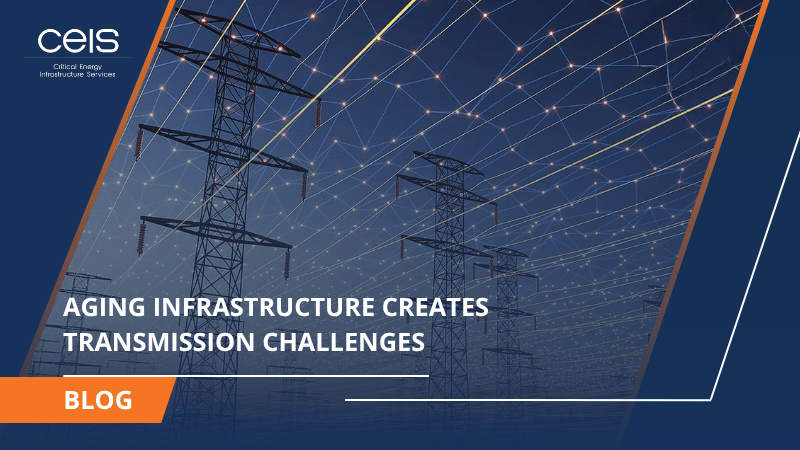
This illustrates what we are facing as the demand for electricity grows while being stuck with transmission and distribution equipment designed for modern life in 1970. The system just can’t handle the strain of demand.
The average home in the U.S. in 1970 used under 100 kwh of electricity annually. The service drop for most homes was at 100 amps. In 2025, the average home uses more than 10,000 kwh per year and the standard service drop is 200 amps.
We have more and new devices in our homes that require more electricity. If we add to the electrical needs of commercial and industrial buildings it’s obvious that we are using a lot of electricity. The trouble we face, however, is that much of the transmission and distribution systems, known as the electric grid, was built between 1950 and 1975. That was before electric cars, data centers, and “smart” technologies came along requiring more and more electricity.
With new electrical needs and aging infrastructure, it should be no surprise that every now and then a “breaker” will trip and regional power outages occur, such as when much of Texas experienced an outage in 2021.
The American Society of Civil Engineers Infrastructure Report Card graded the U.S. electrical grid with a D+ in 2025, down from a C- in 2021. The ASCE’s report cited a shortage of distribution transformers, severe weather events and lack of transmission capacity as some of the reasons for the low grade. The organization predicts the demand for electricity will grow from the 17 GW in 2022 to more than 35 GW in 2030.
It's an alarm that has been raised for years, but the investment needed to bring everything up to date has not met the increasing demand. In addition, some states are increasing regulatory oversight in order to reduce the use of fossil fuels in new construction. Core electrical infrastructure is out of date.
When talking about electrical infrastructure, it refers to three components of the grid:
This aging infrastructure contributes to frequent power outages. The U.S. experiences more outages than most developed countries. The large areas in which power is needed can also make many systems vulnerable to weather events, such as hurricanes, wildfires, and winter storms.
This also increases the cost of maintenance, and can be especially pricey as when emergency repairs need to be made. The aging infrastructure also results in inefficiency and energy losses during transmission and distribution. As usual, costs are passed on to the consumer.
Obviously, the solution to these problems comes through investment in improving the infrastructure. That comes with problems as well.
Chief among those challenges is the cost. According the ASCE report, it would take at least $700 billion to simply modernize the grid. In addition, there are numerous regulatory barriers. The electrical grid does not belong to just one entity; it is fragmented between private and public ownership, making the coordination of large-scale improvements difficult.
The integration of renewable energy such as solar and wind presents its own challenges. Many older systems were built with fossil-fuel power plants at the center. Now, renewable energy is created in places that may not have adequate transmission lines or other infrastructure.
Getting new transmission lines built is another challenge as environmental and land use issue come up, usually in the form of environmental critics and local communities opposed to new transmission line.
Most experts agree that the top priority should be investment in improving infrastructure. From 2017 to 2022, government and private spending exceeded $5 billion and the 2021 Infrastructure Investment and Jobs Act (IIJA) allocated $73 billion for modernize the electric grid.
The massive outages in Texas also pointed to another problem; many regional electric systems are not connected with other systems. That meant that other utilities could not help Texas out with its demand because there was no way to reroute electricity from other systems. Through $1.3 billion in IIJA funding, work on three interregional transmission lines across six state began.
Energy experts contend that steps can be taken to improve the electric grid so that it can handle increased demand and lower costs. They are:
These are only a few things that can be done, but there may be more innovative solutions in the offing. What’s important is that there are dedicated professionals working in the industry to not only thinking about today, but looking at the future.
CEIS has a cadre of experts who understand the intricacies of electrical transmission and distribution, whether it comes to maintenance or new installation. We are leaders in energy and infrastructure services by providing integrated engineering , consulting solutions, and field services for electrical grids.
CEIS Power specializes in project services and support, providing experienced project teams and hard-to-source professionals for the energy and industrial sectors. Clients benefit from a unique combination of utility and OEM-trained expertise that helps exceed operating and asset management goals while navigating change. Backed by deep experience with one of the largest technical staffing companies in the U.S., CEIS Power is focused on delivering reliable energy and infrastructure solutions.
AGING ELECTRICAL INFRASTRUCTURE | GRID RELIABILITY & TRANSMISSION ISSUES | CEIS