Project Background
A leading U.S. regulated electric and natural gas utility was evaluating its need for stronger owner-side oversight across a growing distribution portfolio.
Its existing approach to verifying field work varied by operating company. In many cases it relied on resources affiliated with the contractors performing the work, or on internal staff, to confirm that construction met the utility’s requirements.
Delivery Challenges
When the party doing the work is also the main source of information about it, the owner sees field conditions secondhand. For this utility, the lack of independent owner-side oversight created several connected risks:
- Construction defects could go unidentified until later in the project lifecycle.
- Adherence to utility standards was inconsistent across operating companies and contractors.
- Overreliance on contractor self-reporting reduced visibility into actual field conditions.
- Together, these gaps increased schedule, safety, and reliability risk across the distribution portfolio.
CEIS’s Independent Oversight Approach
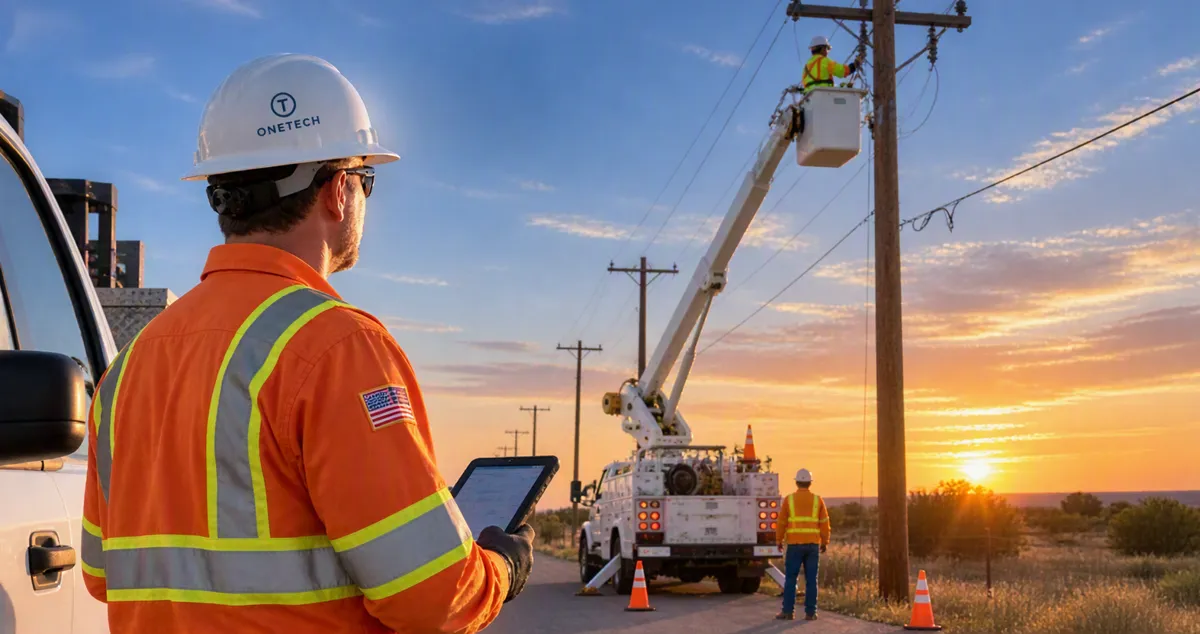
CEIS and One Tech provided field oversight on the owner’s side, independent of the contractors executing the work. The aim was to give the utility a direct, verified view of field execution instead of relying on contractor-reported status.
Independent field inspection
Owner-side inspection of distribution construction in the field.
Construction oversight
Oversight of contractor execution against utility requirements.
Field reporting and escalation
Findings reported to the owner, with issues escalated for attention.
Utility safety management
Safety management support alongside inspection and oversight.
Managed field-services teams
Field teams managed and scaled by CEIS and One Tech.
Specialized utility workforce
Personnel with utility field and construction experience.
How independent oversight connects field work to owner decisions
The delivery model links four activities. Each step builds the owner’s visibility into what is actually happening in the field.
- Field inspectionIndependent inspectors observe construction directly.
- Findings and reportingObservations are reported to the utility, not filtered through the contractor.
- EscalationIssues that need attention are escalated.
- Owner visibilityThe utility gains a clearer view of field execution and contractor performance.
Results and Business Impact
CEIS reports approximately 30% lower inspection cost. The reduction is attributed to a flexible delivery model and right-sized resources: inspection capacity matched to the portfolio’s needs rather than fixed staffing.
Beyond cost, independent oversight reduced delivery risk by replacing reliance on contractor self-reporting with verified field information. The utility also gained improved visibility into field execution and contractor performance.
This case study makes no quantified claims about safety, schedule, or reliability improvements.
Key takeaways
- Independent, owner-side inspection gives a utility its own view of field execution instead of relying on contractor self-reporting.
- Pairing inspection with reporting and escalation turns field observations into information the owner can act on.
- A flexible, right-sized inspection model is the reported driver of the approximately 30% lower inspection cost in this engagement.