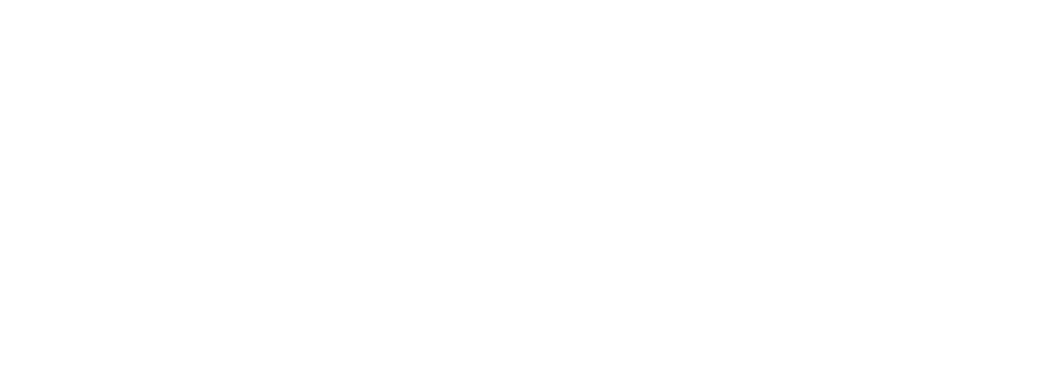
4.4%
Of U.S. electricity in 2023
Data centers consumed about 4.4% of total U.S. electricity in 2023. DOE/LBNL projects the share could reach approximately 6.7% to 12% by 2028.
U.S. DOE / Lawrence Berkeley National Laboratory →
Data Center Services
Mission critical builds. Delivered with discipline. Embedded project management, safety leadership, scheduling, and project controls professionals working inside general contractor and EPC teams on hyperscale data center programs for Meta, Google, and AWS, plus chip fabrication support for Intel.
CEIS does not self-perform construction and does not compete with your general contractor. We embed our people directly into your team’s organization under consulting agreements, sitting in your trailers and reporting through your chain of command, so programs get the technical depth that’s hardest to staff fast.
Verified Market Context
CEIS field experience sits inside a much larger infrastructure shift. These independent statistics are sourced from the U.S. Department of Energy, the International Energy Agency, and NERC.
Data centers consumed about 4.4% of total U.S. electricity in 2023. DOE/LBNL projects the share could reach approximately 6.7% to 12% by 2028.
U.S. DOE / Lawrence Berkeley National Laboratory →The IEA projects global data center electricity consumption will more than double to around 945 TWh by 2030 in its base case.
International Energy Agency →NERC forecasts summer peak demand will grow by 224 GW over the next decade, with new data centers for AI and the digital economy accounting for most of the projected increase.
NERC 2025 Long-Term Reliability Assessment →Industry Context
On many hyperscale programs, available capital is no longer the only constraint. Power, long-lead equipment, specialized labor, and execution discipline increasingly determine how quickly capacity can reach service.
Available generation and grid capacity increasingly influence where campuses can be developed and how large they can become. Texas has become a major development market in part because much of the state operates within ERCOT, creating a distinct power-market environment, but the broader issue is the same nationwide: site selection is increasingly constrained by reliable power availability.
A limited pool of contractors is large enough to execute hyperscale mechanical and electrical scopes, and experienced craft can often choose where they work. Specialized labor availability creates execution pressure, while long-lead equipment remains one of the most common causes of major schedule slippage.
Owners can flex craft headcount through union channels faster than they can pull forward a transformer or switchgear order. When equipment slips, GCs re-phase around it, and quality issues discovered at delivery (unbrazed chiller piping, mis-wired control panels) are increasingly common as new suppliers scale to meet demand.
Many hyperscale systems have never been commissioned before anywhere. Commissioning teams are often writing the procedure while performing the work, which means commissioning readiness has to be planned from the design phase, not staffed as an afterthought.
Community acceptance and permitting are becoming material pre-construction risks in some markets. Local concerns about power demand, water use, construction impacts, and community benefit can delay projects before field execution begins. At the same time, owners are evaluating more efficient cooling strategies and, in some cases, co-located or behind-the-meter generation to address power and infrastructure constraints.
What Are Data Center Services?
Data center services are the project management, scheduling, project controls, safety leadership, site safety, and commissioning-support disciplines that keep a mission critical build on schedule between first shovel and energization.
CEIS delivers these disciplines embedded inside general contractor and EPC teams under consulting agreements. We are not a design firm, not a general contractor, and not a resume-forwarding staffing house. Design stays with firms like AECOM, HDR, and Sargent & Lundy. Self-performed construction stays with the GC. CEIS fills the specialized, hard-to-staff roles in between.
Our Position In The Program
CEIS professionals sit inside your organization, in the same trailers, on the same calls, reporting through the same chain of command as your own team. Invoicing is the only place the line shows up.
“We are in the room, solving problems. The only place you see us as separate is on the invoice.” That embedded posture is why CEIS professionals get treated as part of the GC’s own team on site, not as outside labor.
Data Center Services
These five pillars are the core of every CEIS data center engagement, scaled from a single specialist to a full embedded program team.
Program leadership from concept through energization on multi-year, multi-hundred-million-dollar campuses, from short-duration scopes to full embedded program teams.
Daily Primavera P6 schedule updates, 30/60/90 look-aheads, and critical-path protection, because a job site’s schedule is its single source of truth.
Schedule, resource, cost and risk visibility within client systems such as Primavera P6 and Procore.
Embedded ES&H professionals doing daily field observations, regulatory oversight, and hazard coaching, often running a GC’s entire on-site safety program.
Specialized roles for the hazards unique to hyperscale sites: energy marshals for lockout/tagout and energization, lift directors coordinating dozens of simultaneous crane picks.
L1 (pre-install), L2 (during install), and L3 (production turnover) support, supplementing a commissioning agent’s bench when a facility can’t afford to fall behind at the final, most visible phase of the build.
The five roles hyperscale GCs need most: safety professionals, schedulers & project controls, quality/inspection/superintendents, and commissioning support, sourced from a warm, continuously-interviewed bench, not a cold-call scramble.
Power + Data Centers
The boundary between the facility and the infrastructure feeding it is narrowing. Available generation, interconnection capacity, transmission, substations, campus distribution, cooling, controls, and commissioning increasingly determine speed to compute together.
CEIS brings data center field execution together with broader critical-energy infrastructure capabilities. That allows project teams to connect the building program to the power-delivery realities that increasingly govern site selection, schedule certainty, and energization.
Proof, Not Promises
A sample of the hyperscale and semiconductor programs CEIS has supported directly, embedded inside the general contractor’s team.
CEIS’s first hyperscale engagement, embedded with Fortis Construction, the relationship that anchors CEIS’s data center practice today. Scope grew from safety into project controls and quality across an eight-building program.
A geotechnical failure mid-project forced a full foundation redesign and multi-month pause. CEIS safety teams rebuilt hazard plans around new drilled-pier methods as civil work shifted from trenching to drilling, and the broader program ultimately recovered the lost schedule and finished ahead of its revised delivery timeline. CEIS’s role was focused on adapting the safety program to the changed civil methods and supporting the project team through the revised execution plan.
A semiconductor manufacturing expansion doubling Intel’s Rio Rancho production capacity, embedded with GC Exyte. CEIS was brought in after a crane incident to lead the causal investigation and full site inspection.
Following the investigation, CEIS placed safety professionals on site full-time. No further recordable incidents occurred through the balance of the program, making the case for engaging safety leadership before an incident, not after.
A remote, terrain-blasted campus site (17 miles up a two-lane road, roughly 12,000 workers moved daily) under Fortis Construction. CEIS effectively runs the GC’s field safety program, with the sole exception being one of Fortis’s own staff.
Also the site of a first-of-a-kind building redesign that paused construction for months; CEIS safety programming adapted in step as means and methods changed.
Embedded safety professionals and program administrators supported the site through years of active construction with a strong safety record and minimal major incidents, including recurring leadership site visits as the program matures toward completion.
From The Field
If you’re planning a company’s first hyperscale data center program, this is where CEIS’s Data Center practice leadership starts.
Match construction managers, safety leads, and schedulers to people who have actually delivered mission critical work before, ideally on mega-projects at or above half a billion dollars. First-of-a-kind systems punish generalists learning on the job.
Design accuracy, site selection, and schedule commitments have to be stated up front, not discovered mid-build. Ambiguity here is what turns into redesign, re-phasing, and cost overrun later.
Programs that manage contractor relationships transactionally lose leverage exactly when they need flexibility most. Owners who build long-term regional partnerships get faster problem-solving and better crisis response.
When To Engage CEIS
“We’d rather come in at planning. When we’re brought in mid-project, we’ll get the right people deployed eventually, but early engagement means we can staff ahead of manpower swings instead of chasing them.”CEIS Data Center Practice
Whether you need a single embedded specialist or a full safety and controls team, CEIS mobilizes on a purchase order or an email confirmation, not a four-level approval chain.
Request a Capability DiscussionCommon Execution Bottlenecks
Rarely a single cause. Almost always inexperience, understaffing, or a supplier problem compounding under schedule pressure.
One of the most common preventable execution problems is staffing a program to a fee target rather than the actual scope. A couple of extra salaries on a billion-dollar job is a rounding error next to the cost of recovering from an incident or a missed critical path.
CEIS staffs to the scope, and flags the gap before it becomes a recovery problemTransformers, switchgear, and generators carry long lead times, and new suppliers scaling to meet demand are shipping equipment with real defects, such as unbrazed piping or mis-wired panels, discovered only at commissioning.
CEIS commissioning support catches equipment deficiencies at L1, before installCommissioning can’t start until work is genuinely complete. Optimistic status reporting forces commissioning teams to work out of sequence, the single biggest driver of wasted commissioning time.
CEIS field inspectors verify completion status before commissioning is scheduledNovel equipment configurations mean commissioning teams are sometimes writing the test procedure while performing the work. Under-resourced commissioning agents fall behind fast and cascade delays to every other project on their books.
CEIS supplies surge commissioning capacity when an agent’s bench runs thinWeeks of rain in Oklahoma, snow-closed roads in Cheyenne, or a two-hour, 17-mile commute up a mountain in Sparks, Nevada: regional access and weather routinely cost programs weeks that never show up in the original schedule risk register.
CEIS deploys nationally, including remote and hard-access sites others won’t staffSites running 50 simultaneous crane picks, workers on 12-hour shifts six days a week, and multiple contractors overlapping in the same footprint create real exposure, and a single fatality on a name-brand hyperscale job becomes national news overnight.
CEIS supplies dedicated energy marshals and lift directors, not general safety generalistsElectricians and mechanical craft can pick their region, and a shrinking number of contractors are large enough to self-perform hyperscale-scale mechanical and electrical work, concentrating risk in a handful of subcontractors nationwide.
CEIS recruits nationwide, including for hard-to-staff or remote locationsLocal opposition, permitting requirements and concerns about power demand, water use and community impact can create meaningful pre-construction schedule risk. These issues often emerge well before field execution begins and should be treated as part of early project planning.
CEIS supports the safety, environmental and execution documentation required for disciplined project planning.Why GCs & Hyperscalers Choose CEIS
CEIS is a recognized safety leader in the data center market, and increasingly the team GCs call for scheduling, project controls, and commissioning support once they see the full bench.
We meet the hiring manager, understand the actual day-to-day, and send the right person, typically pre-briefed on comp, duration, and scope before the interview happens.
Our recruiters interview continuously, whether or not there’s an open req. Requests filled on a Thursday have started work the following Monday, on a purchase order, not a four-level contract review.
The large majority of CEIS’s data center work comes from GCs and hyperscaler accounts who’ve engaged us before, the clearest proxy for outcomes we can offer.
No regional lock-in and no large-firm rate card. CEIS reacts and mobilizes faster than larger engineering firms constrained by fixed geography or fixed pricing.
Safety professionals who partner and coach rather than police, the posture that gets field crews to bring problems forward before they become incidents.
CEIS Data Center Practice leadership has visited every active data center job site directly, with monthly check-ins at the VP level on major accounts. This is not a hands-off vendor relationship.
Frequently Asked Questions
Ready To Move Forward?
Whether you need one embedded safety leader, a full project controls team, or surge commissioning support before energization, CEIS mobilizes fast, inside your existing team structure.
HOUSTON DATA CENTER SERVICES | STRATEGIC INFRASTRUCTURE SUPPORT | CEIS